What is Startup Culture & How to Build It in 2025
There will always be a culture in a startup. The only question is whether you’ll shape it or let it happen by default.
Your culture isn’t just perks or open office vibes. It’s how your team works, makes decisions, and grows based on its values, behaviors, and defaults. If you get it right, you’ll attract talent, boost retention, and move faster and make fewer mistakes. If you get it wrong, even great ideas will stall.
The purpose of this guide is to explain what startup culture really is, why it matters, and how to build one that can scale with your company.
What is Startup Culture?
Let’s start by defining culture.
Culture is a collection of values and social interaction among everyone and everything in a society. We know these values and interactions as arts, education, institutions, and entertainment.
A company’s culture is about the values the company shares, the people who make up the company, and how they interact together.
There are many ways to define workplace culture, but it mainly refers to the company’s underlying psychology, its values, and its relationships among its employees.
So, what exactly is startup culture?
An established corporation will have many barriers and growth hurdles that are unavoidable for startups. Startup culture is designed to break down those barriers and hurdles.
It is known that startup cultures tend to be creative, laid-back, and passion-driven rather than rigid.

Characteristics of a Startup Culture
A startup’s culture is defined by four factors:
- Passion: Work doesn’t always feel like work and long hours seem worth it as it defines the company’s existence and acts as an important motivator.
- Personality: The startup’s uniqueness – what makes it stand out from the competition.
- Agility: This refers to the flow of knowledge and information that improves all aspects of the business. It’s the more visible aspect of the business, as it is seen in the way employees work, how offices are organized, and how brainstorming sessions are conducted.
- Authenticity: The startup culture values freedom and respect for each individual’s identity. Bureaucratic companies have processes for everything, whereas startup culture values freedom and respect for everyone’s identity.
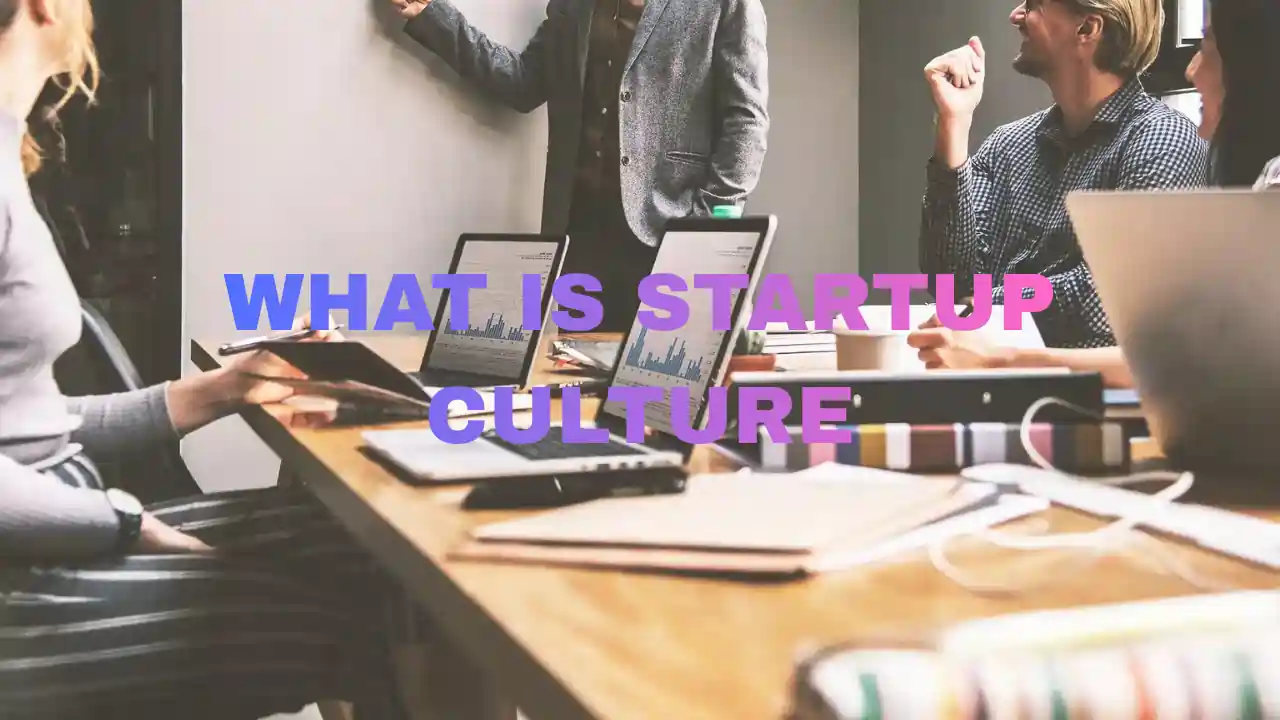
The culture of startups has been criticized for being perhaps too laidback on both the positive and negative sides. Perhaps you imagine people playing foosball and seated in bing bag chairs with flip flops. It is the culture that makes such things work, not the environment that makes them work.
The WeWork Broadway workspace has both bean bag chairs and foosball. I think some New Yorkers wear flip flops. They are just missing ping pong tables, however.
There is a difference between a work environment and culture. Simply adding a foosball table and free snacks is unlikely to solve your work culture problem. However, it will improve your working environment.
In startup work environments, the environment is not the same as the culture, but it is still important since it can either help or hinder a company’s culture.
Are you able to easily engage the people you need to engage in your work environment? Are you able to feel energized or drained in the lighting? Do you feel isolated or confined in your workplace?
more:What Is an Early Stage Startup?
3 Definitions from Founders
Even though most entrepreneurs agree on the concept of a “startup culture,” they will likely disagree on the values associated with it.
This is why we have gathered some well-known founders’ perspectives on startup cultures.
1) Jeff Lawson, Co-Founder of Twilio
A four-year-ago interview with Jeff Lawson on Zurb’s podcast asked him about startup culture, and he responded as follows:
“Thousands of decisions are made every day in Twilio. Culture is how I, as the leader of the company, trust that each of those decisions is the right one. Another way to think about it is that all those decisions should add up to represent ‘the Twilio way’, the way Twilio would do these things.”
Then he added:
“Earlier this year, we rolled out what we call our nine things, which are like our core values. Most people think of core values as a thing on the wall and a nice frame with words like ‘integrity’ that nobody pays attention to. We, instead, have articulated 9 things that we liked and cherished and felt were fundamental to who we were as Twilio.”
2) Joel Gascoigne, Co-Founder of Buffer
In 2012, Joel Gascoigne, co-founder, and CEO of Buffer, published an article on his blog about how culture was perceived in his company. He says:
“Although company culture is something that is worked and adapted over time, it is heavily affected by the personalities of the founding team. There’s no right or wrong with culture, it is simply a combination of natural personality in addition to proactive work to push the culture in the desired direction and maintain certain values.”
Then he adds:
“Building a culture that inspired people to work for you, requires time to make changes and shape it. On the extreme of the proactive approach of culture, you can hire and fire people very specifically based on cultural fit with your company”
3) Brian Chesky, Co-Founder of Airbnb
Airbnb co-founder and CEO Brian Chesky has also written about startup culture, particularly tech startups. In the Medium article “Don’t Fuck Up the Culture”, Peter Thiel gave Airbnb’s team advice after the company raised $150M in series C, which he called “Don’t Fuck Up the Culture”.
A key part of Brian’s article discusses how culture should be built:
“We’ll build it by upholding our core values in everything we do. Culture is a thousand things, a thousand times. It’s living the core values when you hire, write an email, work on a project or walk in the hall. We have the power, by living the values, to build the culture. We also have the power, by breaking the values, to fuck up the culture. Each one of us has this opportunity, this burden.”
more:What Qualifies As A Startup
How Can You Build a Successful Startup Culture?

1) Hire the Right People
Your team is likely to hire the most qualified candidates for each position; however, no position exists in a vacuum. As an example, if you hire a purchasing manager, they’ll have to work with other team members as well.
What kind of team do you have? It’s important to bring in people who share the culture and team you’re creating.
When building a startup culture, you must consider more than just finding the most qualified candidate or having the best resume. You must consider their emotional and physical health, their motivation, and their compatibility with other teammates.
2) Caring For Your Employees
Once you have the right team members, it is essential that you actually care about their wellbeing and success. This is the next step in building your start up culture. When they don’t think you care about them, how can they expect them to care about the work they are doing for you?
It is possible for people to want to do a good job, but you need to make sure they WANT to do the best job possible. How can we help them create that desire?
“It’s Ambition of a Human Based Company,” says Gary Vaynerchuck, in which he believes people will go the distance if he is front and center and shows them he cares.
To him, empathy is the most important principle. As the saying goes, “People don’t care about what you have to say until they know you care about them.”
3) Lead by Example
A common cliche, but one that is often forgotten, is that leading by example is the best way to ensure your employees behave appropriately. If you want them to be rude or short to one another, act like that yourself when they make a mistake.
Regardless of what people do, work culture is a top-down issue. Be patient, kind, and gracious when you see a mistake; people will pass it on to the next person (if they don’t, you need to address it).
4) Acknowledge People’s Achievements
There are many highly motivated and driven people who simply want to power through to the top. However, they often fail to acknowledge the hard work and accomplishments of their team members.
Although it might only be another step for you, it is their hard work and time. If people do not feel appreciated, they won’t want to continue to do good work.
5) Build Relationships With Your Team
It’s important to get to know your employees and build relationships with them. We all face hard times in our lives. Check in and keep an eye out for times when someone may need a day off or to leave early.
It is only through making connections with the people in your team that you know when something distracts them from doing their best work. By making connections with them, you learn what they need to put in 100% every minute they are at work.
6) Establish Your Startup Missions
The mission statement is the cornerstone of your business. It should clarify who you are as a company, how you support your customers, and what makes you relevant in today’s society.
Defining culture before you hire your first employee is important because it is a shared experience between you and your future coworkers.
Startup Culture vs Corporate Culture
How does startup culture differ from corporate culture? This question is commonly asked.
A lot of differences exist between corporate cultures and startups in the way they work, their decision-making processes, and their workforce size, among many other factors, which definitely impact their business cultures.
The following illustration shows some of the main differences between these two types of organizations.
It should be noted that none of these cultures is superior to the other, they are just different from one another.
Why is Startup Culture Important?
The startup culture has a wide range of effects on businesses.

Startup culture has an obvious impact on productivity. A great culture will lead to higher employee motivation, which will lead to greater productivity and fewer mistakes.
When your employees dislike their work, they will not produce the best results. When they have a bad relationship among themselves, they will not be able to collaborate and communicate effectively.
It is also true that a positive startup culture has a number of indirect effects, like an easier hiring process, longer employee retention, and, in some cases, even a better business reputation.
Gary Vaynerchuck, an author and entrepreneur, explains:
“The internal company culture will either enable your company to grow or it will rot it from the inside out.”
The following stats demonstrate the importance of startup culture:
Who’s Responsible for Setting it?
Starting at the top, it goes down.
The right people are crucial for the startup’s culture when it comes to building a culture. It is your responsibility as a founder or CEO to ensure that the people you place in management positions are equipped with the skills necessary to lead effectively and create an environment conducive to the startup’s success. In order for them to better serve your employees, you need to coach and nurture them.
It is important that managers receive management training. There should be general instructions, guidelines for your company, resources, encouragement, and additional or extra training.
It is imperative that leaders manage employees effectively. When people do not excel or produce below their capability, it is your responsibility to take responsibility. Think about how you can help other people reach their potential rather than looking at everyone else as a problem.
more:How to Invest in Startups: A Complete Guide for Beginners and Investors
5 Ideal Startup Cultures
1) Spotify
The Spotify engineering culture is well known for being a great startup company culture. Rather than working in teams of more than 8 people, Spotify’s engineering and product teams work in “squads,” self-organized groups of no more than 8 people with complete autonomy over what they build and how they do it.
Each squad has its own mission, and it is coordinated so that all squad members are aligned with Spotify’s objectives and mission. As well as aligning their goals, they also aim to achieve high autonomy. You can only trust a group of people to work entirely on themselves if alignment is achieved, without worrying that they will go in a different direction.
2) Buffer
We’ve already discussed Joel’s attitude toward startup culture as he co-founded Buffer. Another successful case is Buffer’s culture. In 2013, Buffer’s approach to getting hacked and making their users post all kinds of social media posts can be seen as demonstrating this wonderful culture.
According to the company, they accepted 100% responsibility, provided clear and transparent information to their users and the entire community, and provided helpful instructions about how users could protect their accounts. Joel said the startup saw a massive increase in signups during that period due to this positive press.
3) Auth0
An interesting case is Auth0, which considers “innovation, experimentation and learning” as the backbone of the company. Similar to Spotify, this startup allows their engineers a lot of freedom to innovate and try new things. Failures and mistakes are incentivized, and learning from them is encouraged.
The majority of Auth0’s team works remotely. Clayton Moulynox, the company’s Director of Culture, states, “This allows people to work at times that work best for them.”
4) Wistia
Wistia’s case is also really fascinating, particularly for those who are trying to create a tech startup culture. They have created the Wistia Code School, which pairs their developers with employees within the company who are interested in coding. During the training period of 4-5 months, the employee is expected to solve real-world challenges.
Typically, these employees are in customer support, and instead of opening tickets and asking engineers for assistance, they begin solving coding issues themselves.
5) Paylocity
The culture of Paylocity was created by using employee, partner, and client feedback, and it continues to be improved through employee, partner, and client feedback.
It is important for the team to understand the company’s goals and objectives so they can contribute to them.
Frequently Asked Questions
What is the startup culture?
An entrepreneurial culture is characterized by a creative, relaxed, and passionate attitude as opposed to a rigid one.
What makes a good startup culture?
It is important for a startup’s culture to inspire passion for work, to facilitate the flow of information and knowledge, and to enhance respect for each person’s identity and approach to work.
How do you create a startup culture?
Starting a startup culture starts at the top, by hiring the right people, taking care of employees, mentoring them, acknowledging their achievements, and establishing missions and goals together.
What is meant by startup culture?
This culture embodies the environment and core values of early-stage companies, often in the technology field, although it is not limited to it. The startup world is renowned for its innovative approaches to solving complex problems and its focus on scalability and growth.
What is the 1% rule in business?
Essentially, the 1% Rule is simple to follow: focus on growing your business by 1% every day, and compounded over a year, you get 3,800% better than you were last year. Sir Dave Brailsford, former performance director of British Cycling, demonstrated this theory in his work.
Is 1% equity in a startup good?
Currently, startups with teams of fewer than 12 people are granted an average equity share of 1%. For the first hires, this number can reach 2%, and some companies consider their first hires to be founders and their equity share can be even higher.
Conclusion
It’s not possible to add startup culture later or fix it with perks. It’s possible to build it every day by hiring good people, reinforcing your values, and tolerant or correcting bad behavior. In 2025, the strongest startup cultures will be intentional, people-first, and adaptable, anchored in clear missions and lived values rather than slogans on a wall. A company’s culture becomes an advantage when its founders lead by example, care about their employees, and create an environment that fosters trust, autonomy, and growth. You’ll move faster, attract better talent, and scale your startup faster if you get it right, but if you get it wrong, your startup will struggle to survive.